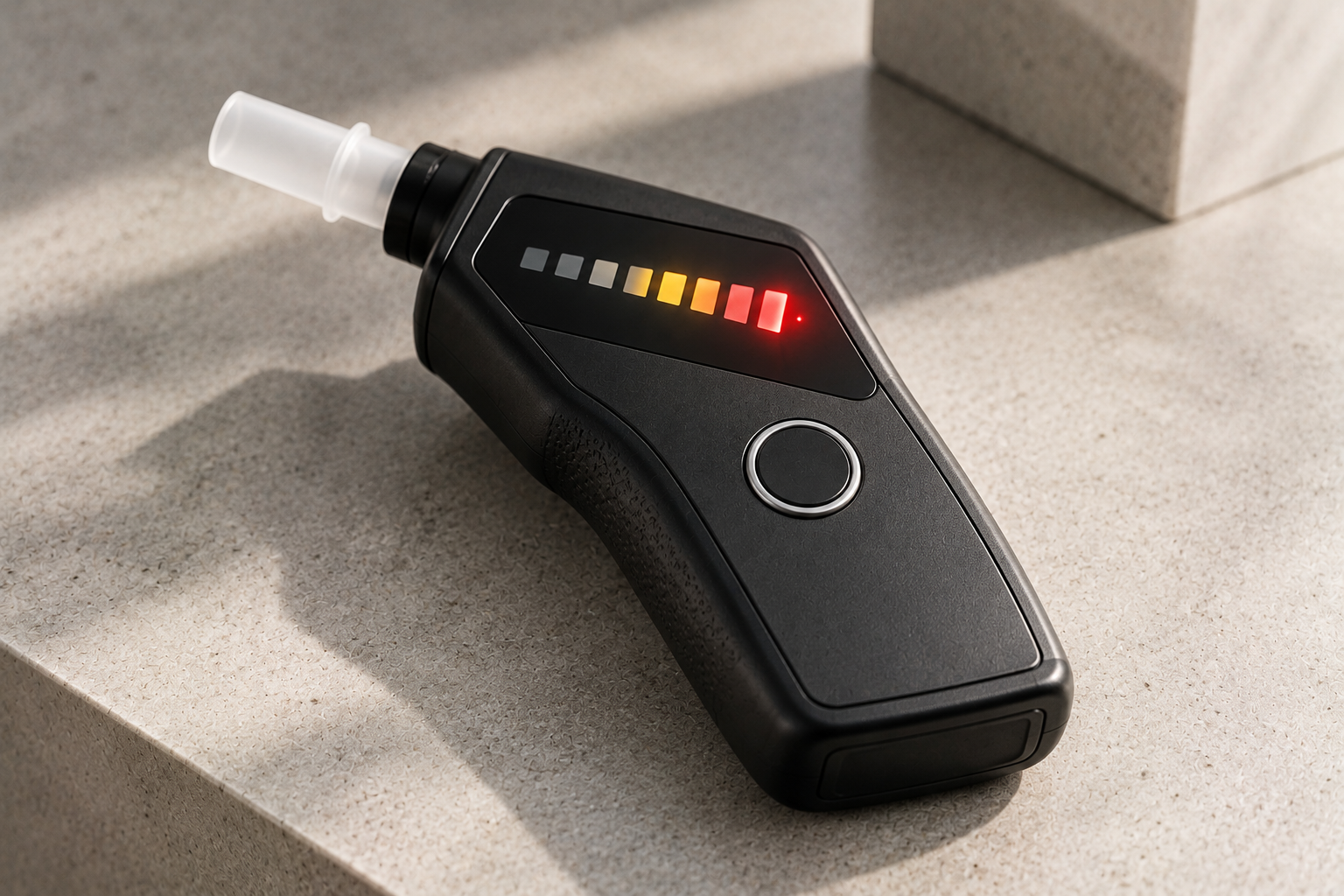
- Mandatory Alcohol Screening (MAS) allows police to demand a breath sample without any suspicion.
- Standardized Field Sobriety Tests (SFSTs)—like eye tracking, walk-and-turn, and one-leg stand—require reasonable suspicion of impairment.
- Saliva tests can detect recent drug use, including cannabis and cocaine.
- Refusing a lawful test (breath, saliva, or SFST) is a criminal offence with penalties equal to or worse than a DUI conviction.
- Drug Recognition Expert (DRE) evaluations happen at the station, not roadside.
- Failing any roadside test usually leads to arrest and further testing at the police station.
- Legal representation is essential to challenge test evidence and protect your rights.
The Roadside Stop: What Can Police Demand You Do?
When police pull you over in Ontario, they have various testing tools at their disposal, each with different legal thresholds for use. Understanding these distinctions is crucial because they affect both your obligations and potential defence strategies.Do I Have to Comply? Understanding Your Rights vs. The Law
The short answer is yes—you must comply with lawful police demands for roadside testing. However, the legal authority varies depending on the type of test: No Suspicion Required (Mandatory Alcohol Screening): Police can demand a roadside breath sample from any lawfully stopped driver without any suspicion of alcohol consumption. Reasonable Suspicion Required: Physical coordination tests (SFSTs) and oral fluid samples require police to have “reasonable suspicion” that you have alcohol or drugs in your body. No Right to Counsel: Unlike arrest situations, you don’t have the right to speak with a lawyer before complying with roadside testing demands.What Happens If I Refuse?
Refusing any lawful police demand for roadside testing is a criminal offence under the Criminal Code. The penalties for refusal are often more severe than those for actually failing the test, including:- Criminal charges with the same penalties as impaired driving
- Immediate licence suspension and vehicle impoundment
- Mandatory court appearances and potential jail time
Can Police Make Me Walk a Straight Line? Understanding the Three Physical Tests
Standardized Field Sobriety Tests (SFSTs) are physical coordination tests that police use to assess potential impairment. These tests have been legally authorized in Canada since 2008 and can only be administered by specially trained officers.When Can Police Demand Physical Tests?
Officers must have “reasonable suspicion” that you have alcohol or drugs in your body before demanding SFSTs. This suspicion can be based on:- Your driving pattern before being stopped
- Observations of your appearance, speech, or movements
- The smell of alcohol or cannabis
- Your responses to initial questions
- Results from other screening tests
The Horizontal Gaze Nystagmus (HGN) Test
This test involves following a small object (like a pen or flashlight) with your eyes while keeping your head still. The officer looks for involuntary jerking of your eyes (nystagmus), which can indicate alcohol or certain drug impairment. What the officer observes:- Inability to smoothly track the moving object
- Jerking when the eye moves to the side
- Jerking that begins before your eye reaches maximum sideways position
The Walk-and-Turn Test
You’ll be instructed to walk heel-to-toe along a straight line for nine steps, turn around using specific steps, and walk back nine steps heel-to-toe. This “divided attention” test assesses both your physical coordination and ability to follow detailed instructions. Common indicators of impairment:- Inability to maintain balance during instructions
- Starting before instructions are complete
- Stopping while walking to regain balance
- Not touching heel-to-toe
- Using arms for balance
- Taking the wrong number of steps
The One-Leg Stand Test
You must stand on one foot of your choice with the other foot approximately six inches off the ground while counting aloud until told to stop (usually 30 seconds). Signs the officer looks for:- Swaying while balancing
- Using arms for balance
- Hopping to maintain balance
- Putting your foot down before instructed
Roadside Screening for Alcohol and Drugs
Beyond physical coordination tests, Ontario police use technological screening devices to detect alcohol and drug presence at the roadside.Mandatory Alcohol Screening: Why Police Don’t Need a Reason to Demand a Breath Sample
Since 2018, Ontario police can demand a roadside breath sample from any driver during any lawful traffic stop, regardless of whether they suspect alcohol consumption. This Mandatory Alcohol Screening (MAS) uses handheld Approved Screening Devices (ASDs). How it works:- You provide a breath sample into a handheld device
- Results typically show “Pass,” “Warn,” or “Fail”
- “Warn” range (.05 to .079%) triggers administrative penalties
- “Fail” result ( .08% or higher) leads to arrest and further testing
Oral Fluid Drug Screening
Police can also demand a saliva sample if they have reasonable suspicion of drug impairment. Approved drug screening devices can detect recent use of:- THC (from cannabis)
- Cocaine
- Methamphetamine
- Other controlled substances
- These devices detect presence, not impairment level
- Positive results combined with other observations can lead to arrest
- What impaired driving means for cannabis users involves complex legal considerations beyond just detection
Roadside “Screening” vs. Station “Evidentiary” Tests: What’s the Difference?
Roadside tests are screening tools used to establish grounds for arrest. They’re not the primary evidence used in court. More sophisticated testing at the police station provides the evidentiary foundation for criminal charges.What Happens if You Fail or Refuse a Roadside Test?
Failing or refusing roadside tests triggers immediate consequences and sets in motion a series of legal procedures that can significantly impact your life.Immediate Administrative Penalties
Before any court proceedings, you face:- Immediate licence suspension: Typically 90 days for failure or refusal
- Vehicle impoundment: Usually 7 days minimum
- Administrative fines: Often $550 or more
- Mandatory programs: Alcohol education or treatment requirements
Criminal Charges and Court Proceedings
Failing roadside tests provides police with grounds to:- Arrest you for impaired driving
- Demand evidentiary breath or blood samples at the station
- Begin the court process that can result in criminal conviction
Enhanced Penalties Under New Ontario Legislation
Recent changes in Ontario have strengthened penalties for impaired driving, including:- Longer immediate roadside suspensions
- Mandatory ignition interlock devices for first-time offenders
- Lifetime licence suspensions for impaired driving causing death
- Enhanced police authority to conduct roadside testing
After an Arrest: The Drug Recognition Expert (DRE) Evaluation at the Station
If police suspect drug impairment, you may be subject to a comprehensive Drug Recognition Evaluation (DRE) at the police station after your arrest. This is not a roadside test—it’s an extensive 12-step procedure conducted by a specially trained Drug Recognition Expert.The 12-Step DRE Process
This comprehensive evaluation includes:- Preliminary breath test to rule out alcohol
- Interview with the arresting officer
- Preliminary examination and pulse check
- Eye examinations (horizontal, vertical, and convergence tests)
- Divided attention tests (including SFSTs)
- Vital signs assessment (blood pressure, temperature, pulse)
- Darkroom examination of pupils and nasal/oral cavities
- Muscle tone examination
- Search for injection sites
- Subject interview about drug use
- DRE expert’s opinion on impairment and drug category
- Demand for biological sample (blood, urine, or oral fluid)
Legal Implications of DRE Evaluations
DRE evaluations are legally authorized and refusal to participate is a criminal offence. The expert’s conclusions, combined with toxicology results, can provide strong evidence for drug-impaired driving charges.Building Your Defence Against Roadside Test Evidence
While roadside test results can seem overwhelming, experienced defence lawyers know how to challenge this evidence effectively.Common Defence Strategies
Challenging the Legal Basis: Did police have proper grounds to make their demands? Were procedures followed correctly? Medical and Physical Conditions: Various medical conditions, medications, and physical limitations can affect test performance regardless of impairment. Environmental Factors: Weather, road conditions, footwear, and other environmental factors can impact test results. Officer Training and Procedure: Were the tests administered by properly trained officers following correct procedures?The Importance of Experienced Legal Representation
Given the complexity of impaired driving law and the serious consequences involved, having skilled legal counsel is essential. Understanding what is the best and worst case scenario for your DUI requires careful analysis of your specific circumstances. Whether you need a DUI lawyer in Toronto, London, Windsor, or Kitchener, experienced Ontario defence lawyers for DUI charges understand how to challenge roadside test evidence and build effective defences.Frequently Asked Questions
Q: Can I refuse to get out of my car during a traffic stop? A: No. If police have lawful grounds to demand roadside tests, you must comply. Refusing can result in additional charges for obstructing police and failing to comply with lawful demands. Q: What if I have a medical condition that affects my balance or coordination? A: Medical conditions can affect test performance, but you should still comply with police demands and address these issues later with your lawyer. Refusing the tests will only make your situation worse. Q: Do roadside test results automatically mean I’ll be convicted? A: No. Roadside tests are just one piece of evidence. Experienced defence lawyers can challenge test procedures, results, and legal grounds. Many factors affect the strength of the Crown’s case. Q: Can I request a different type of test if I’m unable to perform the physical tests? A: Police generally aren’t required to offer alternative tests, but medical inability to perform tests may be relevant to your defence. It’s important to clearly communicate any medical issues to both police and your lawyer. Q: How long do I have to provide roadside samples? A: You must provide samples promptly when lawfully demanded. Unreasonable delay can be considered refusal. However, you should be given reasonable time to understand the demand and physically provide the sample. Q: What should I do immediately after failing roadside tests? A: Remain calm, comply with police instructions, don’t make statements about your alcohol or drug consumption, and contact an experienced DUI lawyer as soon as possible. The earlier you get legal help, the better your defence options. If you’re facing DUI charges based on roadside test results, don’t face these serious allegations alone. The consequences are too severe, and the law too complex, to navigate without experienced legal representation. Contact Kruse Law today to discuss your case and begin building your defence.
Michael Kruse is a seasoned criminal defence lawyer with more than 36 years of experience in Ontario. A former Assistant Crown Attorney, Mike brings decades of courtroom and trial experience to the defence of serious criminal charges. He leads Kruse Law Firm with a strategic, practical approach focused on strong advocacy and achieving the best possible outcome for every client.